Why it matters
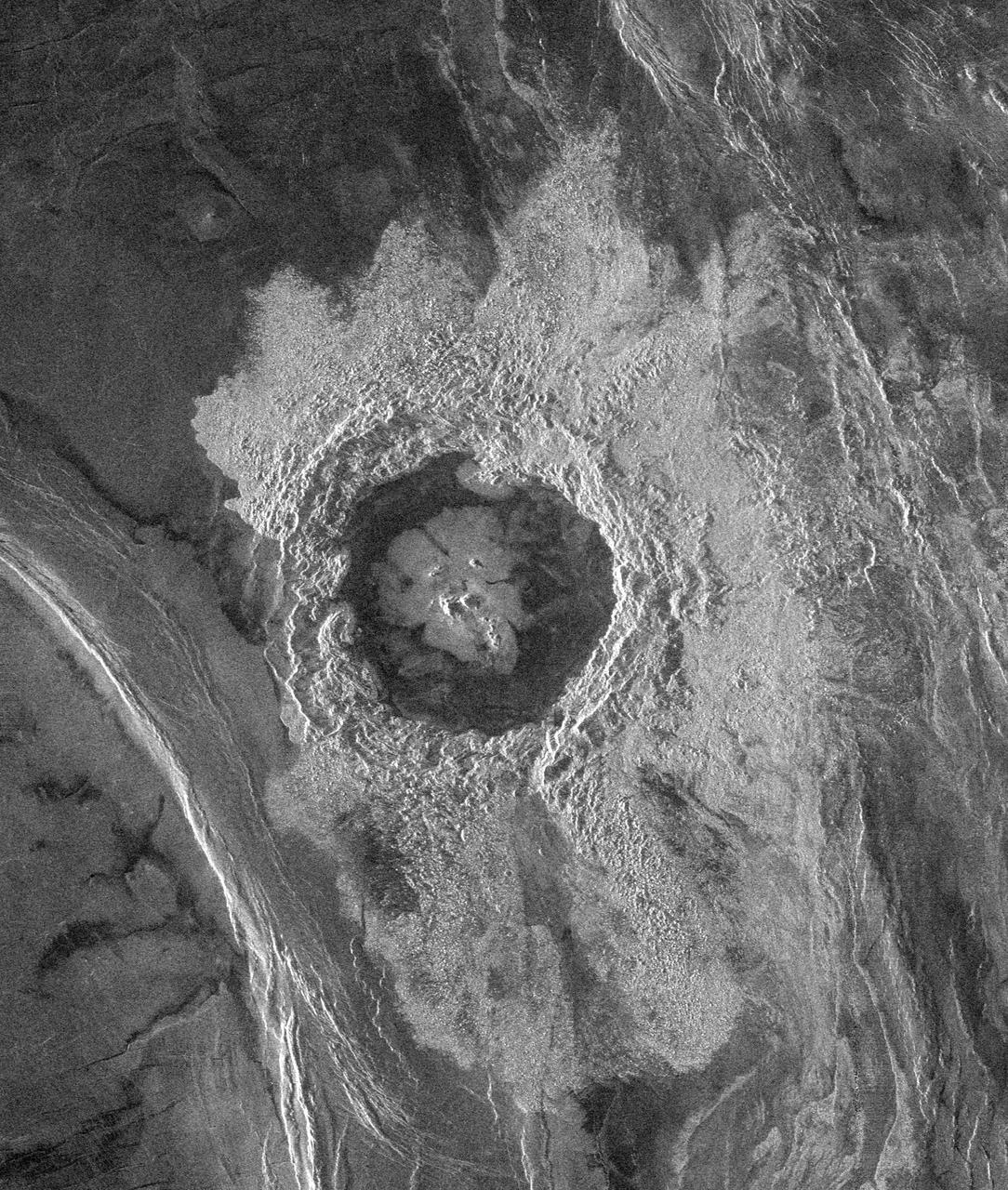
Mead sets the scale for the Venus section and asks the interface to explain radar imagery.
Measurements and uncertainty
Diámetro270 km
Depthnot listed
Agerelative to Venus's young surface
EstadoConfirmado
Coordinates12.500° N / 57.200° E
Record levelextended
Extended record: core parameters have an editorial baseline, while age, depth, and preservation still require primary-source review.
Perfil científico
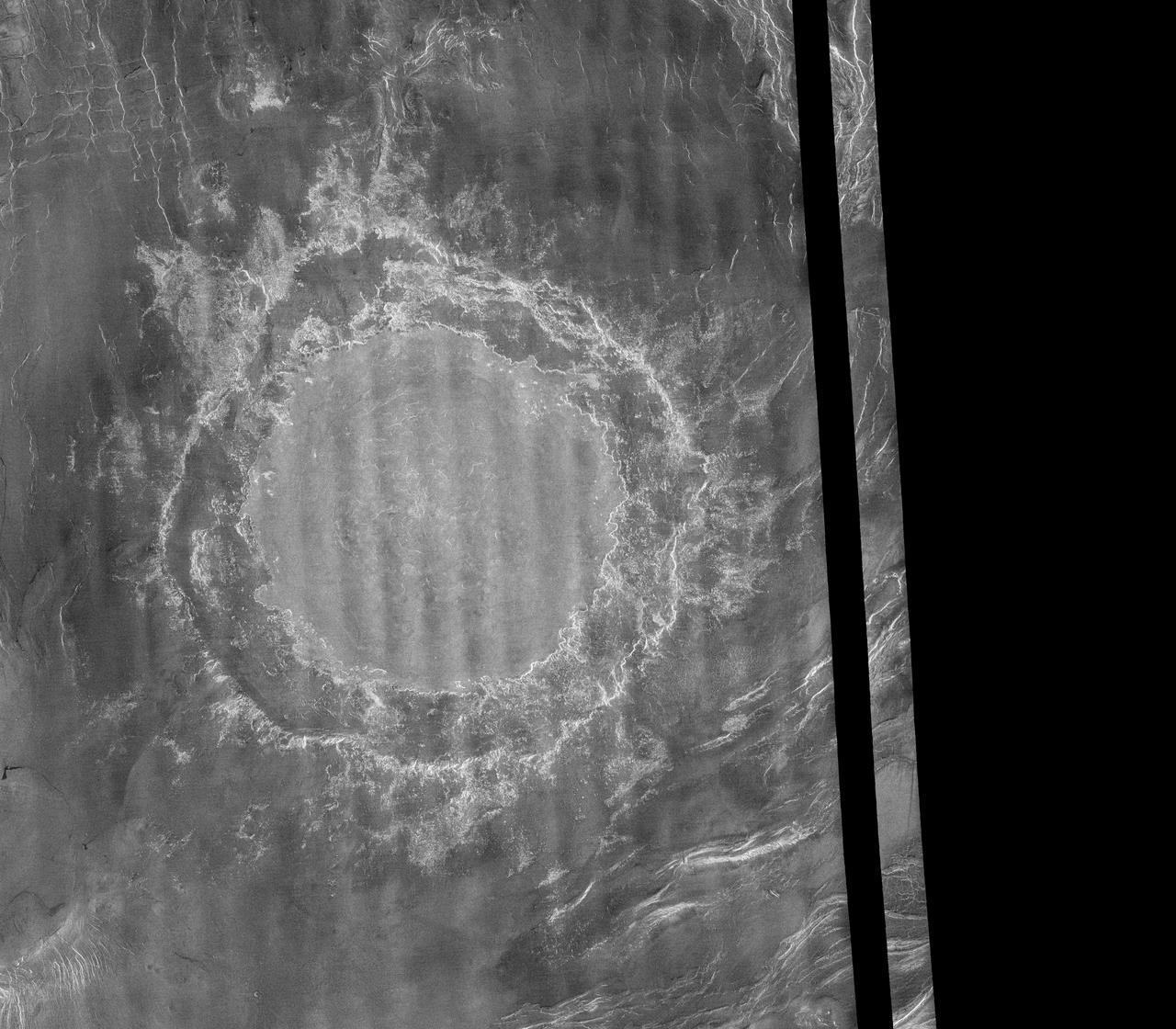
The structure shows ring morphology, radar-bright ejecta, and the relationship between impact forms and Venusian terrain.
Data provenanceGazetteer of Planetary Nomenclature; NASA Image and Video Library
Galería de reconstrucción
Más lecturas visuales del cráter
Si la imagen verificada no basta, la ficha recibe una reconstrucción científica: no fantasía en lugar de dato, sino una hipótesis visual separada de las fuentes.
Paleta del mundoVenusian amber, radar, and dense atmosphere
Visual reconstruction
Reverse reconstruction → Chronological inversion → Bidirectional analysis → The present as an archive of the future
Cada ficha necesita una vista previa visual: una imagen existente, una fuente tratada estéticamente o una reconstrucción científica.
Historia de investigación
Its detailed image is primarily associated with Magellan radar mapping.
Fuentes
- Last reviewed
- 2026-05-08
- Source baseline
- Gazetteer of Planetary Nomenclature; NASA Image and Video Library
- Uncertainty note
- Extended record: core parameters have an editorial baseline, while age, depth, and preservation still require primary-source review.
Education mode
Datos
- Venus has few very small craters because of its dense atmosphere.
- Mead is named after anthropologist Margaret Mead.