Why it matters
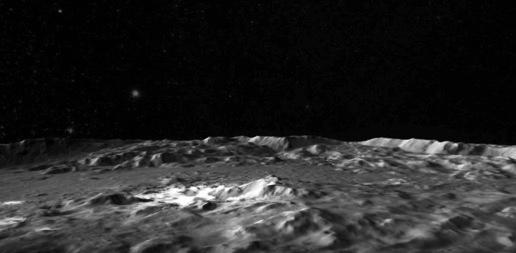
Menrva shows that crater scarcity is also scientific information: Titan's surface can hide and rework impact traces.
Measurements and uncertainty
Diámetro392 km
Depthnot listed
Agerare large Titan crater
EstadoConfirmado
Coordinates20.100° N / 87.200° W
Record levelextended
Extended record: core parameters have an editorial baseline, while age, depth, and preservation still require primary-source review.
Perfil científico
Titan requires radar and infrared reading: crater morphology here is tied to atmosphere, precipitation, and organic materials.
Data provenanceGazetteer of Planetary Nomenclature; NASA Image and Video Library
Galería de reconstrucción
Más lecturas visuales del cráter
Si la imagen verificada no basta, la ficha recibe una reconstrucción científica: no fantasía en lugar de dato, sino una hipótesis visual separada de las fuentes.
Paleta del mundoicy turquoise, deep space, and distant moons

Visual reconstruction
Reverse reconstruction → Chronological inversion → Bidirectional analysis → The present as an archive of the future
Cada ficha necesita una vista previa visual: una imagen existente, una fuente tratada estéticamente o una reconstrucción científica.
Historia de investigación
The name was adopted by the IAU in 2006; the feature is known from Cassini data and official nomenclature.
Fuentes
- Last reviewed
- 2026-05-08
- Source baseline
- Gazetteer of Planetary Nomenclature; NASA Image and Video Library
- Uncertainty note
- Extended record: core parameters have an editorial baseline, while age, depth, and preservation still require primary-source review.
Education mode
Datos
- Official diameter: about 392 km.
- Titan has a dense atmosphere, making craters rare.
- Menrva connects craters with the theme of active surfaces.