Why it matters
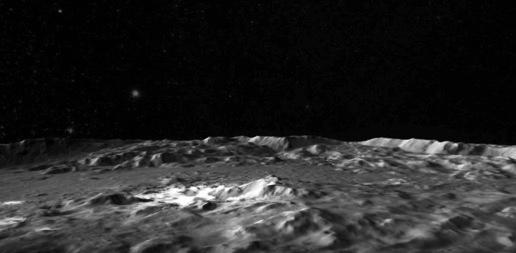
Menrva shows that crater scarcity is also scientific information: Titan's surface can hide and rework impact traces.
Measurements and uncertainty
Diamètre392 km
Depthnot listed
Agerare large Titan crater
StatutConfirmé
Coordinates20.100° N / 87.200° W
Record levelextended
Extended record: core parameters have an editorial baseline, while age, depth, and preservation still require primary-source review.
Profil scientifique
Titan requires radar and infrared reading: crater morphology here is tied to atmosphere, precipitation, and organic materials.
Data provenanceGazetteer of Planetary Nomenclature; NASA Image and Video Library
Galerie de reconstruction
Davantage de lectures visuelles du cratère
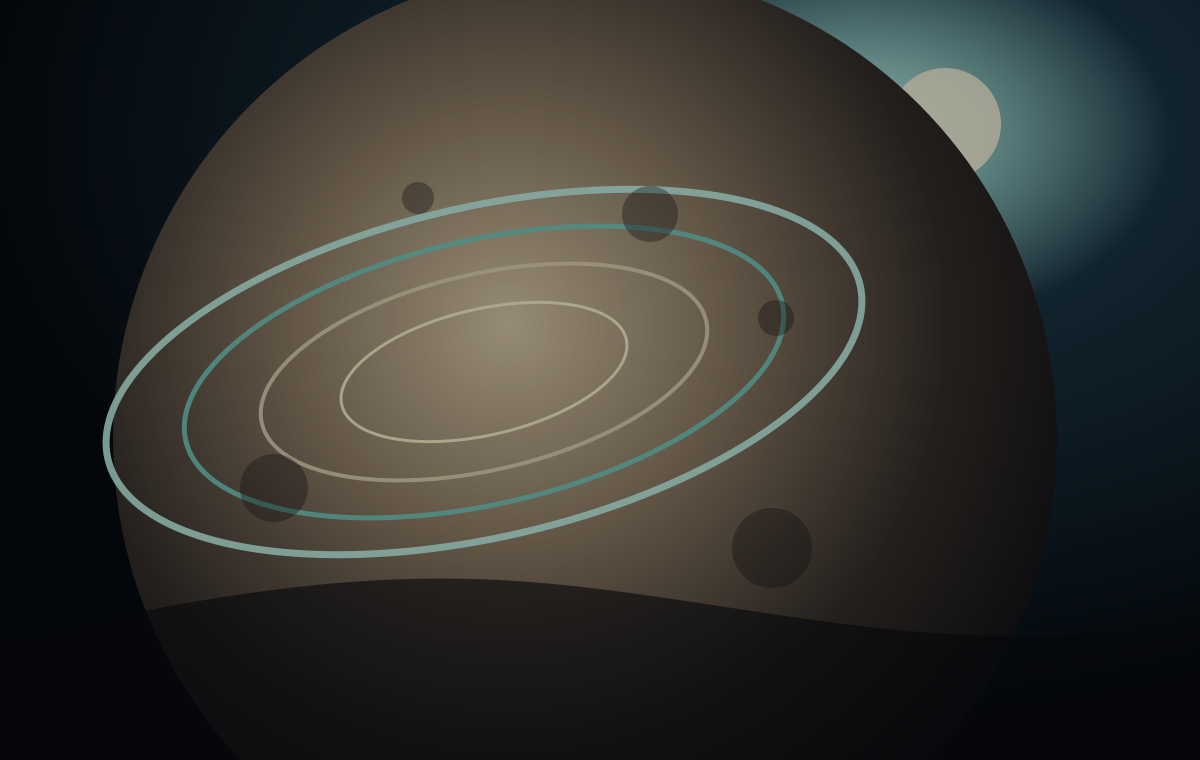
Si l'image vérifiée ne suffit pas, la fiche reçoit une reconstruction scientifique : non pas de la fantaisie à la place du fait, mais une hypothèse visuelle séparée des sources.
Palette du mondeicy turquoise, deep space, and distant moons

Visual reconstruction
Reverse reconstruction → Chronological inversion → Bidirectional analysis → The present as an archive of the future
Chaque fiche doit avoir un aperçu visuel : image existante, source traitée esthétiquement ou reconstruction scientifique.
Historique de recherche
The name was adopted by the IAU in 2006; the feature is known from Cassini data and official nomenclature.
Sources
- Last reviewed
- 2026-05-08
- Source baseline
- Gazetteer of Planetary Nomenclature; NASA Image and Video Library
- Uncertainty note
- Extended record: core parameters have an editorial baseline, while age, depth, and preservation still require primary-source review.
Education mode
Faits
- Official diameter: about 392 km.
- Titan has a dense atmosphere, making craters rare.
- Menrva connects craters with the theme of active surfaces.