Why it matters
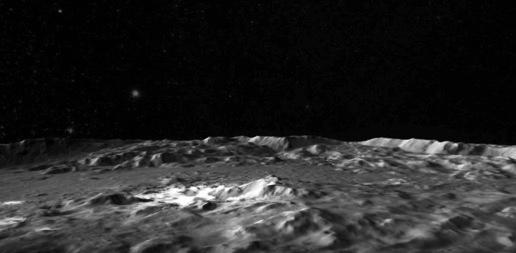
Valhalla shows that in the outer Solar System a crater can be not a bowl, but an entire planetary-scale ring system.
Measurements and uncertainty
Extended record: core parameters have an editorial baseline, while age, depth, and preservation still require primary-source review.
Profil scientifique
Valhalla's rings read as the response of an ice-rock crust to a giant impact, useful for comparing impact mechanics across small and large bodies.
Galerie de reconstruction
Davantage de lectures visuelles du cratère
Si l'image vérifiée ne suffit pas, la fiche reçoit une reconstruction scientifique : non pas de la fantaisie à la place du fait, mais une hypothèse visuelle séparée des sources.
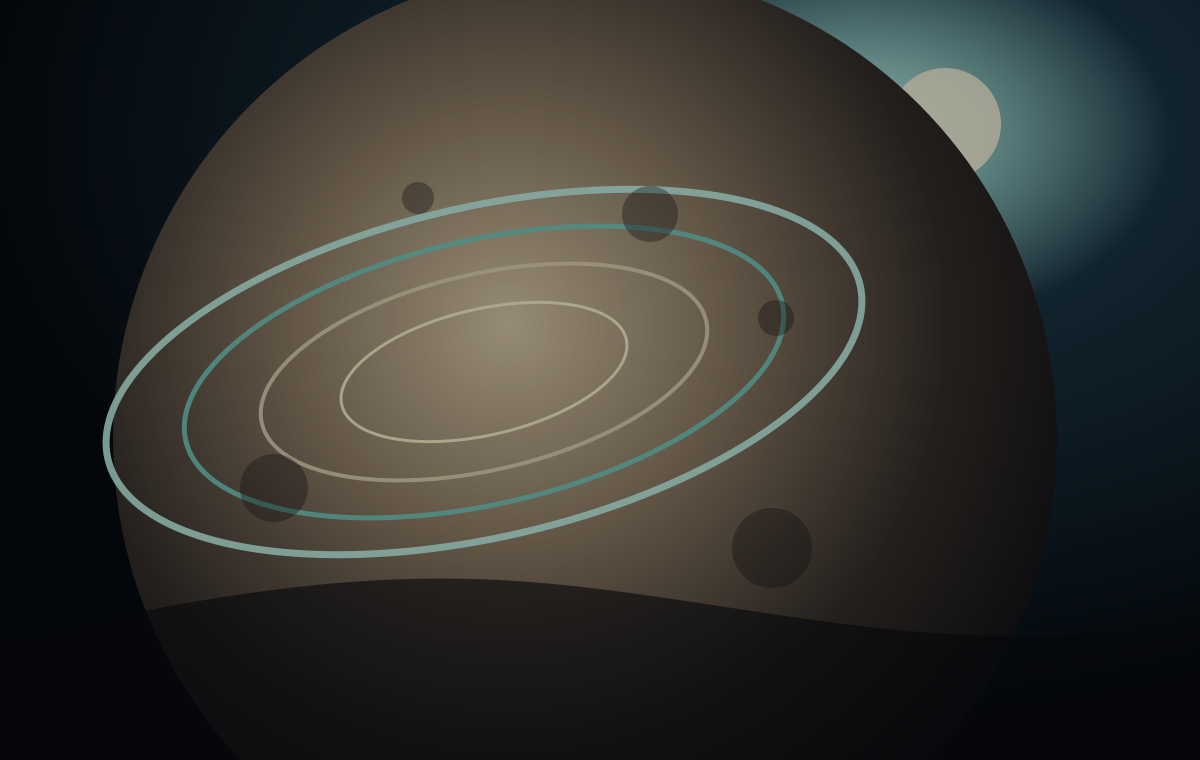
Visual reconstruction
Reverse reconstruction → Chronological inversion → Bidirectional analysis → The present as an archive of the future
Chaque fiche doit avoir un aperçu visuel : image existante, source traitée esthétiquement ou reconstruction scientifique.
Historique de recherche
The feature is listed in the IAU/USGS planetary nomenclature and is known from missions to the Jupiter system.
Sources
- Last reviewed
- 2026-05-08
- Source baseline
- Gazetteer of Planetary Nomenclature; NASA Image and Video Library
- Uncertainty note
- Extended record: core parameters have an editorial baseline, while age, depth, and preservation still require primary-source review.
Education mode
Faits
- Official Gazetteer diameter: about 3000 km.
- The name refers to Valhalla from Norse mythology.
- For the site, it anchors the Jupiter-moons branch.