Mimas
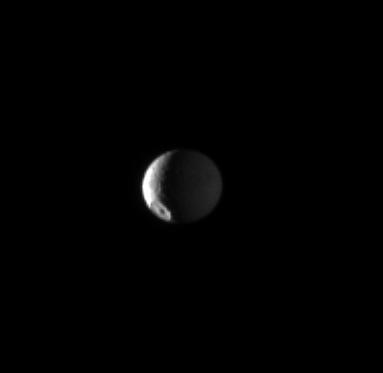
Herschel is so large relative to Mimas that it becomes the moon's dominant visual fact.
Branche de recherche
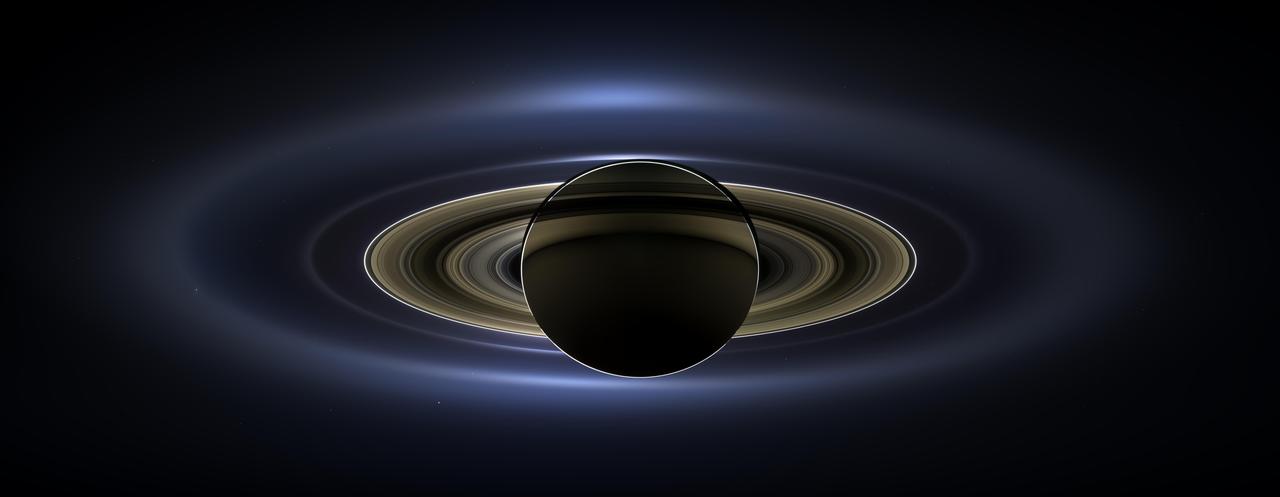
Saturn's moons deserve a separate branch: Mimas, Tethys, Iapetus, and Titan differ in material, scale, and visual drama.
Logique du groupe
For Saturn's system, the present becomes an archive of the future: today's profile records not only crater form but how future missions may reinterpret icy surfaces.
Tous les cratères lointainsHerschel is so large relative to Mimas that it becomes the moon's dominant visual fact.
Odysseus shows how a huge impact can remain legible on a small icy body without terrestrial-style erosion.
Iapetus adds the theme of contrast: craters are read across bright and dark surface materials.
Titan matters as an exception: dense atmosphere and active surfaces make craters rare and scientifically valuable.
Cratères de cette famille
 Aperçu visuelPalette: icy turquoise, deep space, and distant moons
A giant crater on Saturn's moon Mimas, so large it nearly defines the small world's appearance.
 Aperçu visuelPalette: icy turquoise, deep space, and distant moons
One of Tethys's largest craters, comparable in scale to the visual identity of the moon itself.
 Aperçu visuelPalette: icy turquoise, deep space, and distant moons
A large crater on Iapetus, interesting against the moon's strong contrast between bright and dark terrains.
 Aperçu visuelPalette: icy turquoise, deep space, and distant moons
One of Titan's few large craters, important because of the moon's dense atmosphere and active surface.