Why it matters
Shackleton connects crater morphology with future navigation and resource scenarios for lunar missions.
Measurements and uncertainty
直径21 km
Depth4.2 km
Ageage under study
状态已确认
Coordinates89.900° S / 0.000° E / prime meridian
Record levelminimal
Seed record: coordinates and diameter support navigation, while geology, age, and visual rights need enrichment.
科学档案
Its walls receive contrasting illumination while the floor may preserve ultra-cold conditions and volatiles.
Data provenanceGazetteer of Planetary Nomenclature
重建图廊
更多陨石坑视觉解读
如果已验证图像不足,档案会补充科学重建:不是用幻想替代事实,而是与来源清晰区分的视觉假设。
世界调色lunar graphite, silver, and cold shadow

Visual reconstruction
Reverse reconstruction → Chronological inversion → Bidirectional analysis → The present as an archive of the future
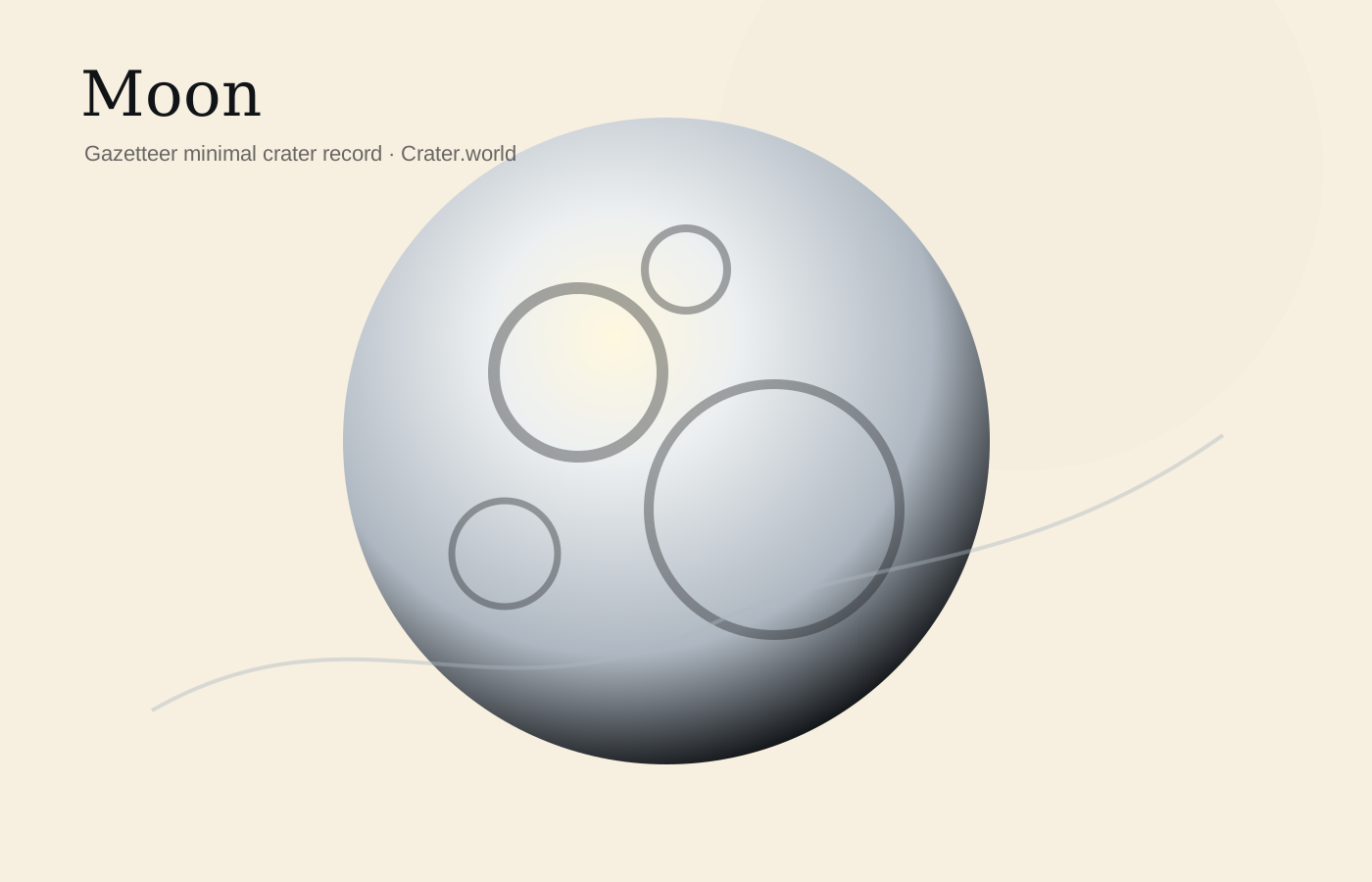
每张档案都需要视觉预览:现有图像、经过美学处理的来源,或科学重建图。
研究历史
The polar region has been studied by orbiters in the context of water, illumination, and future landings.
来源
- Last reviewed
- 2026-05-08
- Source baseline
- Gazetteer of Planetary Nomenclature
- Uncertainty note
- Seed record: coordinates and diameter support navigation, while geology, age, and visual rights need enrichment.
Education mode
事实
- The crater often appears in south-pole exploration scenarios.
- Its floor receives almost no direct sunlight.