Why it matters
Shackleton connects crater morphology with future navigation and resource scenarios for lunar missions.
Measurements and uncertainty
Diameter21 km
Depth4.2 km
Ageage under study
StatusConfirmed
Coordinates89.900° S / 0.000° E / prime meridian
Record levelminimal
Seed record: coordinates and diameter support navigation, while geology, age, and visual rights need enrichment.
Scientific profile
Its walls receive contrasting illumination while the floor may preserve ultra-cold conditions and volatiles.
Data provenanceGazetteer of Planetary Nomenclature
Reconstruction gallery
More visual readings of the crater
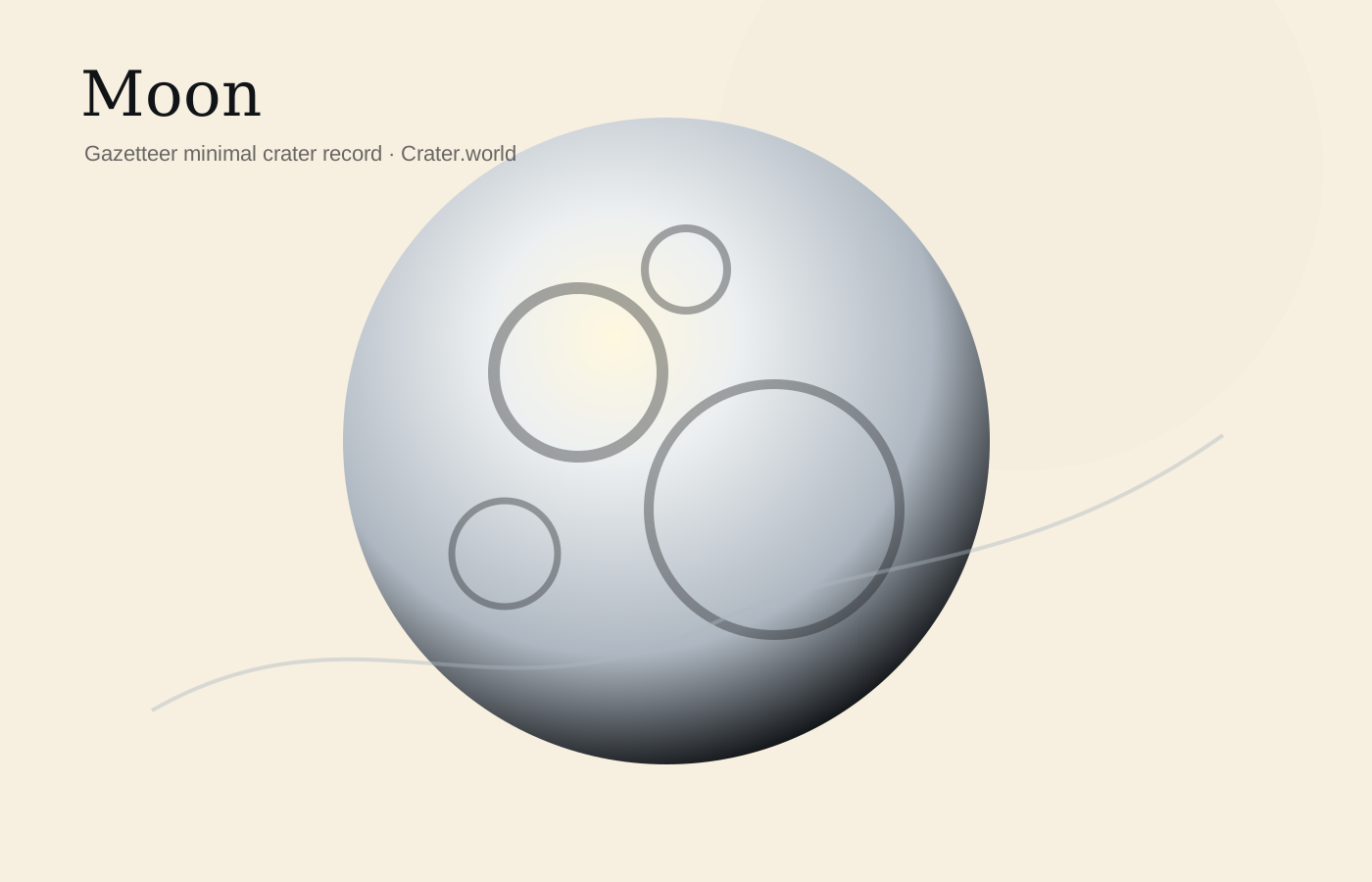
If verified imagery is not enough, the profile receives a scientific reconstruction: not fantasy in place of fact, but a visual hypothesis clearly separated from sources.
World palettelunar graphite, silver, and cold shadow

Visual reconstruction
Reverse reconstruction → Chronological inversion → Bidirectional analysis → The present as an archive of the future
Every profile needs a visualization preview: an existing image, an aesthetically treated source, or a scientific reconstruction.
Research history
The polar region has been studied by orbiters in the context of water, illumination, and future landings.
Sources
- Last reviewed
- 2026-05-08
- Source baseline
- Gazetteer of Planetary Nomenclature
- Uncertainty note
- Seed record: coordinates and diameter support navigation, while geology, age, and visual rights need enrichment.
Education mode
Facts
- The crater often appears in south-pole exploration scenarios.
- Its floor receives almost no direct sunlight.